
What photo-taking does to memory
A striking insight for cultural institutions is that taking a photograph of something may prevent visitors from remembering it well.
Psychologist Linda Henkel coined the term 'photo impairment effect' after conducting a study in an art museum. Those who took photos recalled fewer objects and with less detail than those who just looked. The culprit is 'cognitive offloading' — once the camera captured it, the brain stops encoding the experience. Further research shows that taking photos impairs sound memory even more than visual memory. When filming a concert, for example, one becomes a broadcaster, watching oneself being there, rather than being present and retaining the memory of the sound.
Divided attention is one of the most reliable memory killers that researchers know of. We cannot encode something to which we were not paying attention.
For cultural organisations, this raises an interesting question: are visitor photography policies helping people to remember their visit, or are they quietly working against it? At QWB Lab, we measure the lasting effect of a visit as its 'Wellbeing Legacy'. Encouraging moments of unmediated observation or listening could enhance the experiences that visitors take home with them.
Subscribe to our free monthly newsletter to get stories like this in your inbox.
What photo-taking does to memory
A striking insight for cultural institutions is that taking a photograph of something may prevent visitors from remembering it well.
Psychologist Linda Henkel coined the term 'photo impairment effect' after conducting a study in an art museum. Those who took photos recalled fewer objects and with less detail than those who just looked. The culprit is 'cognitive offloading' — once the camera captured it, the brain stops encoding the experience. Further research shows that taking photos impairs sound memory even more than visual memory. When filming a concert, for example, one becomes a broadcaster, watching oneself being there, rather than being present and retaining the memory of the sound.
Divided attention is one of the most reliable memory killers that researchers know of. We cannot encode something to which we were not paying attention.
For cultural organisations, this raises an interesting question: are visitor photography policies helping people to remember their visit, or are they quietly working against it? At QWB Lab, we measure the lasting effect of a visit as its 'Wellbeing Legacy'. Encouraging moments of unmediated observation or listening could enhance the experiences that visitors take home with them.
Subscribe to our free monthly newsletter to get stories like this in your inbox.
What photo-taking does to memory
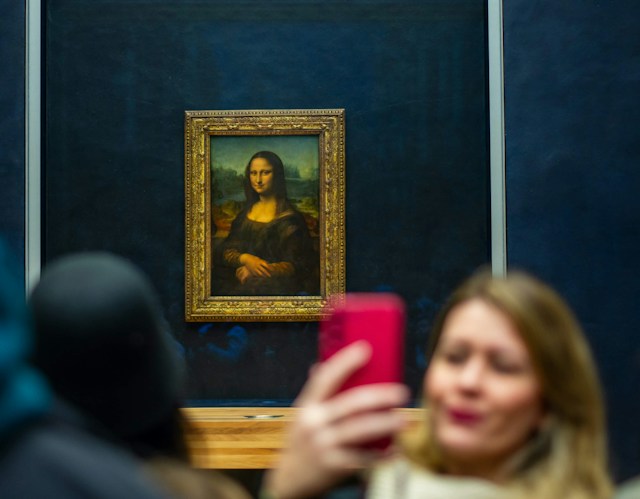
A striking insight for cultural institutions is that taking a photograph of something may prevent visitors from remembering it well.
Psychologist Linda Henkel coined the term 'photo impairment effect' after conducting a study in an art museum. Those who took photos recalled fewer objects and with less detail than those who just looked. The culprit is 'cognitive offloading' — once the camera captured it, the brain stops encoding the experience. Further research shows that taking photos impairs sound memory even more than visual memory. When filming a concert, for example, one becomes a broadcaster, watching oneself being there, rather than being present and retaining the memory of the sound.
Divided attention is one of the most reliable memory killers that researchers know of. We cannot encode something to which we were not paying attention.
For cultural organisations, this raises an interesting question: are visitor photography policies helping people to remember their visit, or are they quietly working against it? At QWB Lab, we measure the lasting effect of a visit as its 'Wellbeing Legacy'. Encouraging moments of unmediated observation or listening could enhance the experiences that visitors take home with them.
Subscribe to our free monthly newsletter to get stories like this in your inbox.


